

Designer Contributors:
Lindsey Thompson, Preston Feather
Courtney Kasper, Preston Feather
Monica Dowen, Sander & Sons
Holiday gatherings always seem to end up in the kitchen. Guests linger over appetizers, someone pours another drink, and conversations unfold while the meal comes together. Intentional design makes room for these moments while helping the host enjoy them, too.
We asked three designers, Courtney, Lindsey and Monica, who together bring nearly 40 years of experience, to share how they approach kitchens made for entertaining, offered ideas for creating spaces that feel welcoming and work comfortably when everyone gathers.
Start with How You Host
Before choosing cabinetry features or planning a larger island, consider what entertaining looks like in your home. Do several people help prepare the meal? Do guests gather around appetizers while you cook? Does hosting mean a seated holiday dinner or a casual afternoon with family?
“I always advise my clients to think of how their family operates in their home,” Monica explains. “I like to stress that there is no ‘one size fits all’ approach to design.”
That understanding guides the layout. Monica looks closely at clearances and potential pinch points, especially where people might cross paths while helping in the kitchen. Courtney also puts traffic flow at the top of her list, prioritizing generous room to move around work areas when guests are present.
Lindsey encourages planning for shared tasks: “Everything should be easily accessible, and the kitchen should allow for two people for cooking, prepping, or cleaning.”
Together, these considerations help create a kitchen that feels comfortable throughout the gathering, from the first preparations to the last dishes.
Give Gathering Spaces a Purpose
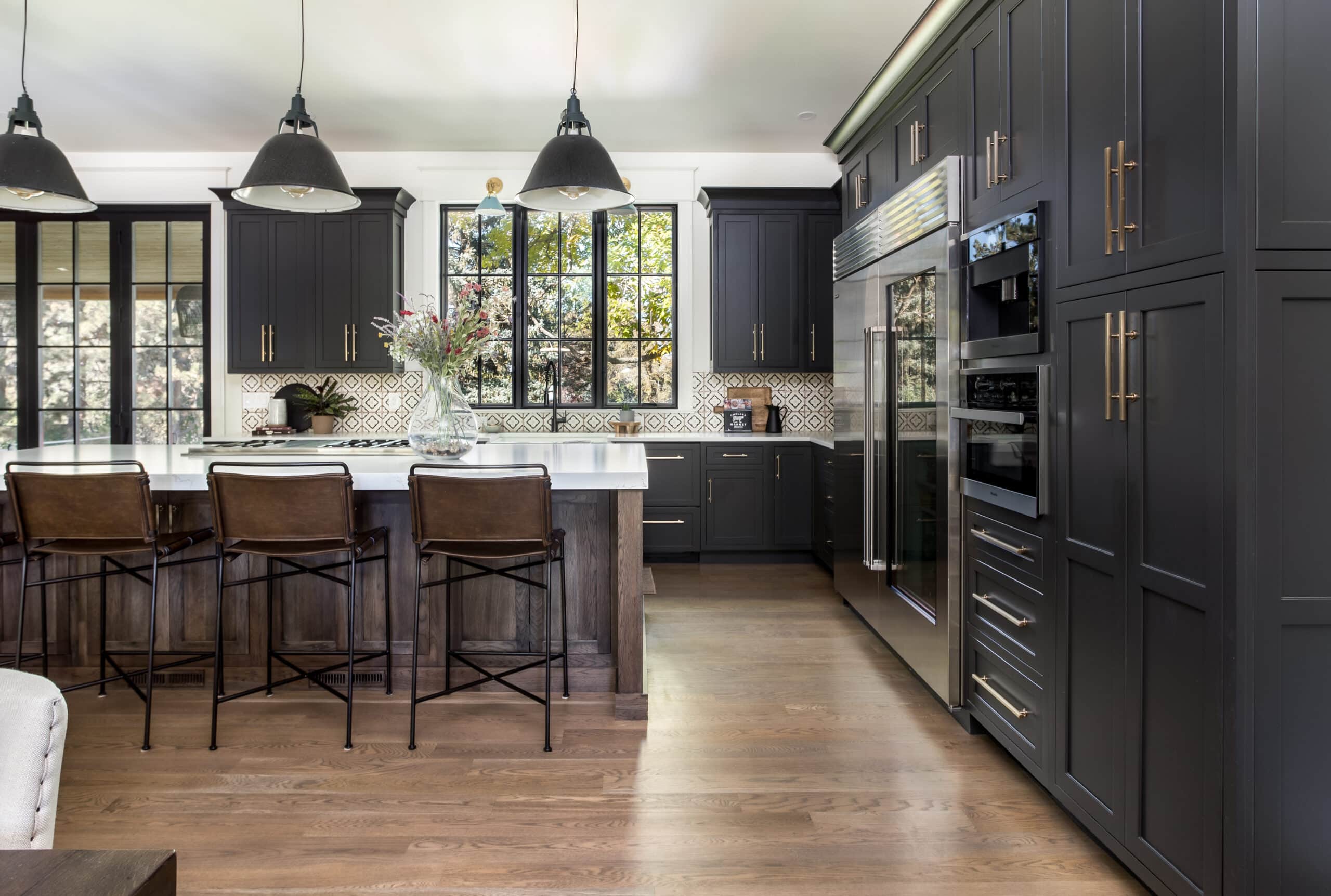
An island can become the center of holiday entertaining, offering a place to prep food, set out a buffet, and catch up with guests. Its size and features should support those uses while leaving adequate circulation around it.
Lindsey sees clients choosing islands without a sink, or with only a small prep sink, to preserve an open countertop. That uninterrupted surface can shift from baking projects to serving dishes as the day unfolds. Courtney also values the storage beneath an island, often using it for platters and other entertaining essentials.
Seating deserves the same attention. Beyond island stools, Lindsey suggests a nearby dining table or built-in banquette to give guests multiple places to settle in. With a few inviting options, everyone can remain part of the conversation.
Make It Easy for Guests to Help Themselves
A beverage station gives guests a place to refill their glasses while keeping the main cooking area available for meal preparation.
Both Courtney and Lindsey recommend considering under-counter beverage refrigeration. Lindsey emphasizes locating it away from the cooking area, while Courtney likes a nearby wet or dry bar that brings specialty glassware and cocktail accessories together.
Cabinetry can make these areas especially intuitive. Pull-out bottle storage or deep rollouts keep drink mixes organized, and open shelving or glass-front cabinets help guests find a glass without needing to ask.
The result is a small measure of independence for guests and fewer interruptions for the host.
Plan Storage for What Comes Out on Holidays
Serving platters, oversized bowls, and baking dishes deserve a place in the storage plan, even if they only come out a few times each year.
“Drawers, drawers, and more drawers!” is Courtney’s go-to recommendation. She favors their easy access and suggests deep drawers with dividers for entertaining platters. She also prefers separate storage areas for cutting boards and baking sheets, giving each a clear home.
Monica highlights another useful solution: cabinetry with pocket doors. A countertop cabinet can house a coffee station or small appliances, with doors that tuck away when the area is in use and close to conceal its contents afterward.
“Having that accessibility while still being able to hide the mess is something that my clients are drawn to,” she shares.
Where space allows, a butler’s pantry or scullery can provide additional room for entertaining supplies and supporting tasks. Courtney’s dream pantry would hold small appliances, entertaining dishes, and dry goods.
Bring Function and Atmosphere Together
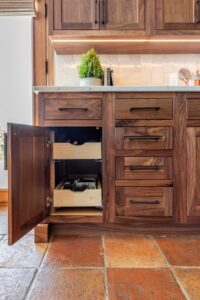
The way a kitchen feels matters alongside how it functions. Warm finishes and integrated lighting help a practical workspace feel inviting when guests arrive.
Courtney and Lindsey are drawn to warmer paint colors and combinations of painted and stained cabinetry. Monica also sees clients returning to wood, appreciating the character and depth it brings. Each choice offers an opportunity to reflect the homeowner’s personal style.
For Monica, integrated lighting is a feature she would want in her own dream kitchen. “It adds a functional element as well as a layering of light that I find really beautiful.”
Lighting can support preparation while bringing a softer glow to cabinetry and gathering areas as the evening continues.
Make Room for What Matters
A kitchen made for entertaining begins with understanding the people who use it. Clear paths, accessible storage, and thoughtfully placed gathering areas can make hosting feel more natural.
With WoodHarbor cabinetry, those considerations come together in a design tailored to the homeowner’s routines and style, creating a kitchen ready for holiday traditions, everyday meals, and the conversations that keep everyone lingering a little longer.
Thank you to Monica Dowen at Sander and Sons for the beautiful project photography.
